PLANNING GUIDE · SHUFFLER CARD GIFTS
How to Plan Mahjong Shuffler Card Gifts and Event Favors
Combine a practical table accessory with coordinated artwork, packaging, quantities, sample approval, and a realistic event schedule.
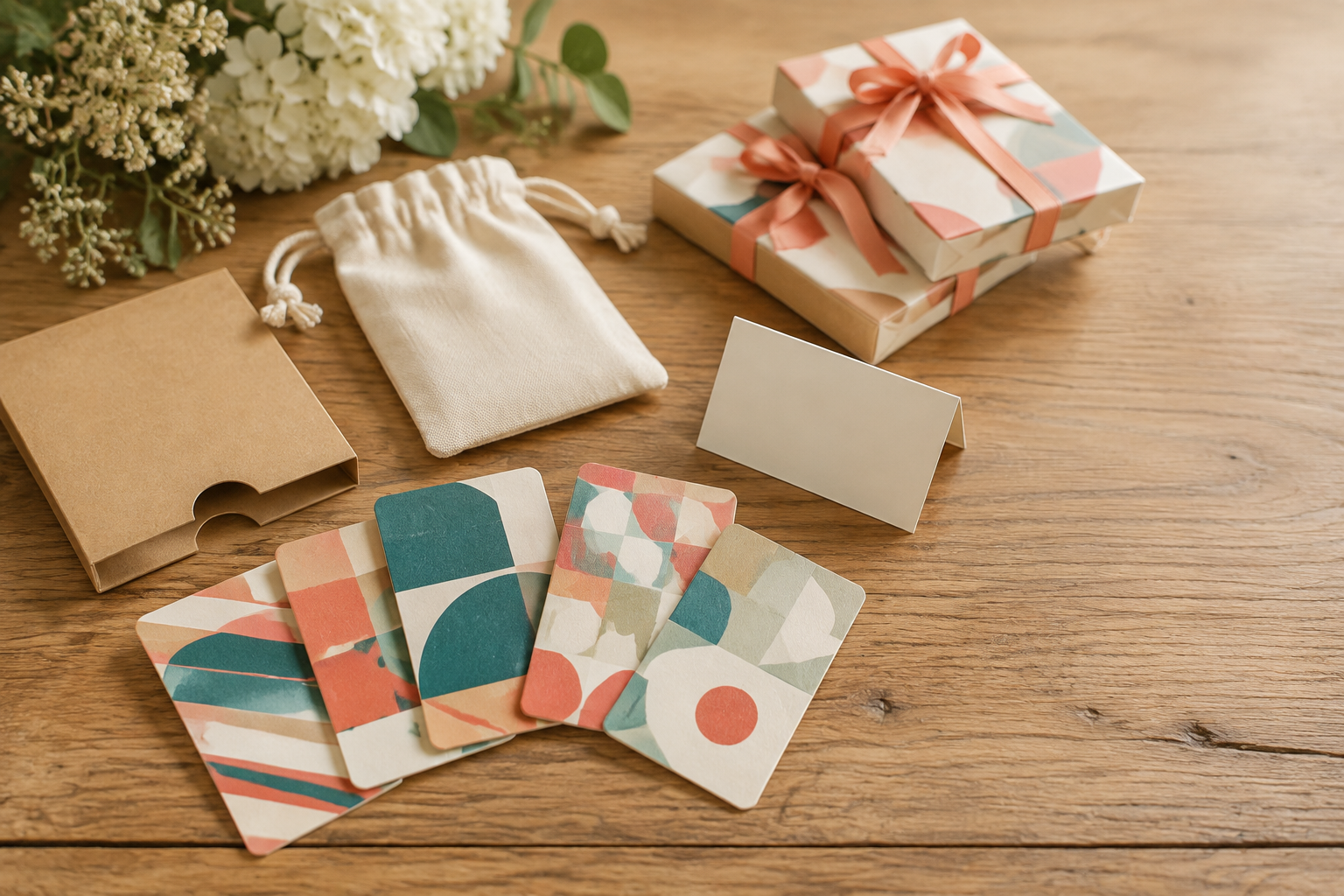
Mahjong shuffler cards can work well as event favors and gift set accessories because they combine a practical table function with space for coordinated artwork. Players hold the cards instead of using bare palms while manually mixing face-down tiles. For a successful gift project, plan the card itself, the quantity per pack, the packaging, the artwork rights, the event schedule, and the sample approval as one complete product.
This guide explains how retailers, clubs, event organizers, and custom brands can develop shuffler card gifts that are useful, easy to distribute, and consistent with the rest of a Mahjong-themed collection.
What is a Mahjong shuffler card gift?
A Mahjong shuffler card gift is a packaged card accessory intended for use when players manually mix face-down tiles. The user holds the card as a small hand tool rather than placing a bare palm directly against the tiles.
The gift value comes from combining that function with an organized presentation. Depending on the project, the cards may be packed as a table set, included with other accessories, distributed to event guests, offered by a club, or sold as part of a coordinated retail collection.
The cards should add a pleasant shared ritual and visual personality without making claims about changing how a group plays.
Where shuffler card gifts fit best
Club welcome gifts
A club may provide shuffler cards to new members or place coordinated sets at shared tables. For this use, clear set organization and easy storage are usually more important than elaborate packaging.
Event favors
Shuffler cards can be prepared as favors for social events, hosted game days, fundraisers, or themed gatherings. Event favors benefit from compact packaging, a consistent visual theme, and a distribution plan that is simple for staff or hosts.
Retail gift add-ons
Retailers can position shuffler cards as a small companion accessory within a broader Mahjong-themed assortment. A gift-ready pack should be easy to identify, protect the card surfaces, and communicate what is included without exposing protected or unauthorized content.
Branded community merchandise
Clubs, creators, venues, and community organizations may use authorized logos, original artwork, or event graphics. The artwork should be owned, licensed, or otherwise approved for the intended product and channel.
Coordinated gift sets
Shuffler cards may be paired with score pads, pencils, storage pouches, or other approved accessories. Each item should have its own compartment or protective layer so hard components do not scratch printed surfaces.
Start with the real table function
Gift presentation matters, but the product still needs to feel comfortable in use. Before designing packaging, confirm the physical card specification.
- Finished width and height
- Corner shape and edge comfort
- Material and thickness expectations
- Surface finish and grip preference
- Print coverage on each side
- Quantity of cards in each pack
- Storage between uses
- Coordination with other products in the set
A card that is too small, too flexible, too slippery, or uncomfortable at the edge may look attractive in a box but feel less useful at the table. A physical sample is the best way to evaluate handling.
Decide the right pack structure
Do not treat the number of cards per package as an afterthought. The pack structure affects packaging size, event distribution, inventory tracking, and replacement planning.
- One coordinated table pack
- Multiple table packs inside a club storage carton
- One compact favor pack per guest or household
- One shuffler card component inside a larger accessory gift set
- Refill packs for clubs or event organizers
The right choice depends on how the recipient will use the product. Confirm the intended table setup and distribution method before finalizing quantities or packaging dimensions.
Build an artwork system, not just one card face
A strong gift project usually needs a small visual system rather than a single isolated design. That system may include the card artwork, pack label, insert, outer box, and shipping carton identification.
Keep the color palette, logo placement, illustration style, typography, event or collection name, product naming, package labels, and approved contact information consistent.
Artwork must be original, licensed, or supplied with clear authorization. Avoid third-party trademarks, copied illustrations, protected gameplay instructions, or designs that imitate another brand too closely. Any sample photograph used for promotion should also be owned or licensed for commercial use.
Plan packaging around distribution
For events
Favor packaging should be compact and quick to distribute. If staff will place many packs at tables or into guest bags, consistent labeling and carton organization can save time during setup.
For clubs
Reusable pouches, sleeves, or small boxes may be practical when sets move between tables. Outer cartons should identify the approved design and pack quantity so staff can find replacements without opening every box.
For retail
Retail packaging should keep the product flat, clean, and easy to identify. Confirm whether the pack will sit on a shelf, hang from a display, appear inside a gift box, or ship directly to an online customer. The display method affects package dimensions and label placement.
For multi-item gift sets
Separate the printed cards from hard or abrasive accessories. Test the assembled set so the cards can be removed easily and do not rub against sharp corners, metal parts, or rough surfaces during transport.
Create a clear event quantity plan
Event quantities should be based on the real distribution plan rather than a rough attendance estimate alone.
- Count the number of tables or recipients.
- Set the number of cards or packs allocated to each.
- Add display or demonstration samples.
- Add staff or host sets.
- Plan replacement stock for damaged or missing packs.
- Keep archive samples for future reorders.
- Separate any retail or sponsor allocation.
Keep a simple quantity worksheet that shows how the total was calculated. This makes the order easier to review and reduces confusion when the event team, designer, and supplier discuss the project.
Use samples to review the complete experience
A digital proof is useful for checking content and placement, but a physical sample helps answer questions that a screen cannot.
- Finished size and shape
- Card stiffness and handling
- Edge and corner comfort
- Printed color under normal lighting
- Surface feel
- Pack count and packaging fit
- Ease of removal and repacking
- Label accuracy
- Appearance with other gift set components
Approve the sample against a written specification. If changes are requested, identify each revision clearly and confirm which version becomes the production reference.
Plan timing backward from the event date
Custom event products should not be planned from the event date alone. Work backward through delivery, transportation, production, sample review, artwork approval, and specification confirmation.
For planning purposes, a regular custom sample is often around 10 days, and standard bulk production for shuffler cards is often around 10–15 days. These are conditional references, not fixed promises. Actual timing depends on the final specification, artwork readiness, materials, finishing, packaging, quantity, production schedule, and approval speed. Transportation time is additional, and unexpected circumstances may add several days.
If the project includes score pads or Mahjong-themed puzzles, those components commonly require around 20–25 days for bulk production, subject to the same conditions. Use the longest component timeline when planning a combined gift set.
Understand MOQ as a planning variable
Custom MOQ is confirmed by inquiry because it depends on the product specification, material, process, packaging, and quantity structure. For existing-stock items, 5 sets is the current planning reference, subject to availability and final confirmation.
Before asking for an MOQ, provide the intended pack structure and total quantity. A request for individual cards is not the same as a request for the same number of packaged table sets, and the distinction affects production and packaging planning.
Prepare for reorders before the first order ships
Event artwork is often time-sensitive, but clubs and retailers may want to reorder the same product later. Good file control makes that easier.
- Final approved artwork files
- Approved product specification
- Sample approval record
- Packaging dielines and label files
- Color references
- Pack-count details
- Carton identification
- Photographs of the approved product
- Notes about production changes
For dated events, decide whether a future reorder should repeat the date, remove it, or use an evergreen version of the artwork.
A practical shuffler card gift checklist
- Intended recipient and use occasion
- Finished card size and shape
- Material, thickness, and finish expectations
- Quantity of cards per pack and total packs
- Original or authorized artwork
- Packaging format and labels
- Relationship to other gift set items
- Physical sample requirements
- Delivery destination
- Event or launch date
- Transportation method and buffer time
- Person responsible for final approval
A complete brief helps the supplier review feasibility, MOQ, sampling, packaging, and timing without relying on assumptions.
Frequently asked questions
What do Mahjong shuffler cards do?
Players hold the cards instead of using bare palms while manually mixing face-down tiles. They provide a practical hand tool and can add coordinated color or artwork to the table.
Are shuffler cards suitable for event favors?
Yes. They can be useful event favors when the card size, pack count, artwork, packaging, and distribution plan are confirmed together. The best format depends on whether the favor is intended for an individual, household, table, or larger gift set.
What artwork can be used on custom shuffler cards?
Use original artwork, licensed artwork, or artwork supplied with clear authorization. Avoid third-party trademarks, copied designs, protected instructional content, and imagery that the buyer does not have permission to reproduce.
How long does a custom shuffler card order take?
A regular sample is often around 10 days, and standard bulk production is often around 10–15 days. These are conditional planning references. Specifications, artwork, materials, finishing, packaging, quantity, production scheduling, approvals, and unexpected circumstances can affect timing. Transportation time is additional.
What is the MOQ for custom shuffler cards?
Custom MOQ is confirmed by inquiry because it depends on the final specification and packaging. Existing-stock MOQ is currently a planning reference of 5 sets, subject to availability and confirmation.
Should an event organizer approve a physical sample?
Yes. A physical sample allows the organizer to review handling, color, finish, pack count, packaging fit, labeling, and the complete gift presentation before bulk production.
PLANNING SHUFFLER CARD GIFTS?
Share the complete gift brief.
Send your intended use, card specification, pack count, quantity, authorized artwork, packaging idea, destination, and target date. We can help organize the questions needed for a practical sample and production review.
Start a project discussion ->Learn how to use and care for shuffler cards.
Build a club and event shuffler card kit.