CUSTOM PRODUCT GUIDE · MAHJONG SHUFFLER CARDS
Custom Mahjong Shuffler Cards for Retail Brands: A Planning Checklist
Start with practical handling, then coordinate the specification, authorized artwork, packaging, sample, and production plan.
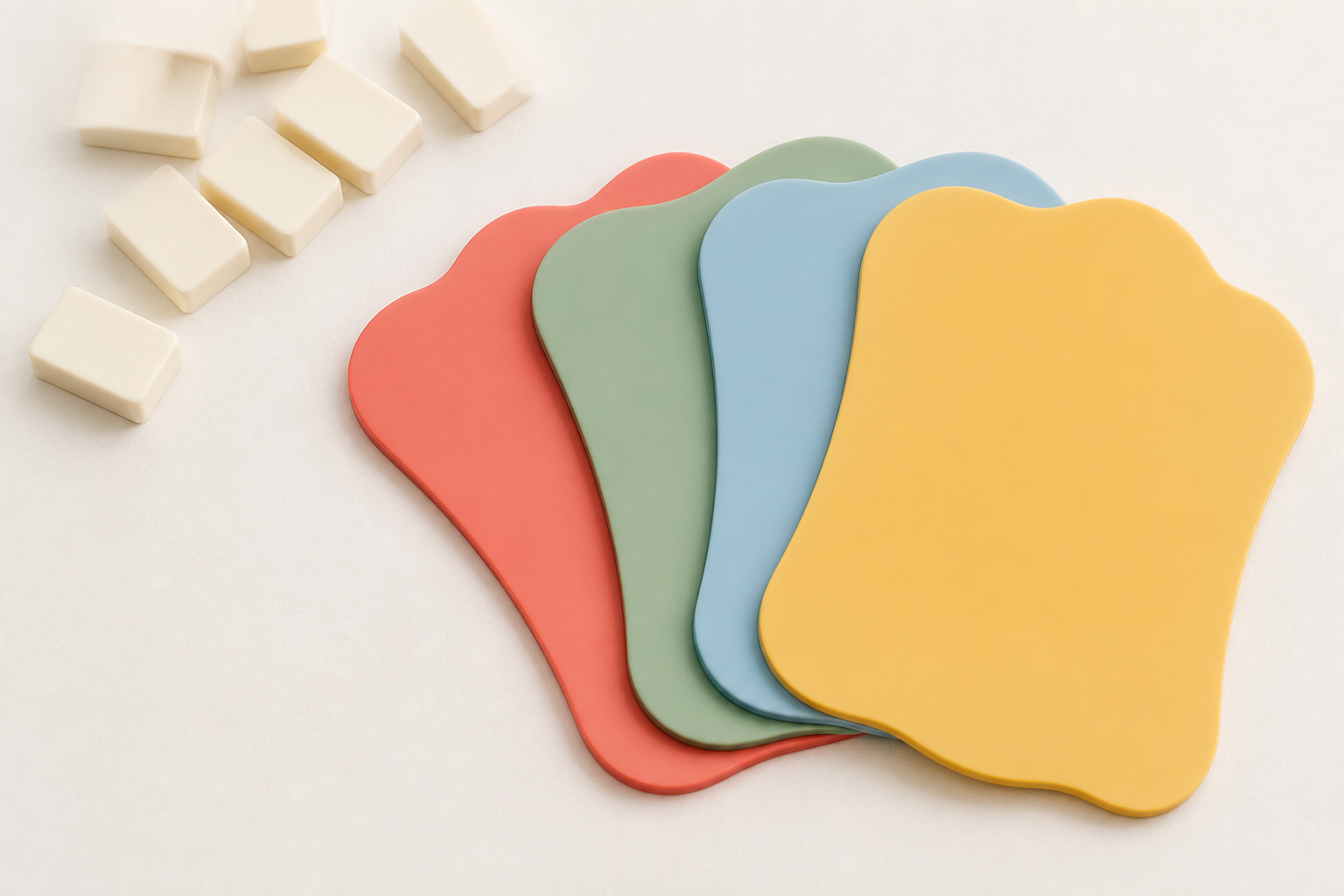
Custom Mahjong shuffler cards should be designed as practical table accessories first and branded products second. They are held in the hand and used instead of bare palms while players manually mix face-down Mahjong tiles, adding color and fun to the shared motion. A successful custom project therefore needs comfortable handling, suitable material, clear and authorized artwork, protective packaging, a reviewed sample, and realistic production planning.
For retailers and custom brands, the best time to resolve these details is before artwork is finalized. Early coordination helps the product, packaging, photography, and online listing present the same approved information.
What is a Mahjong shuffler card?
A Mahjong shuffler card is a broad handheld accessory used during manual tile mixing. Players guide the cards through face-down tiles instead of pressing their bare palms directly into the tiles.
The accessory does not mix the tiles automatically. The player still controls the movement by hand. Its value comes from the shared experience: it provides a defined surface for the mixing motion and adds a playful visual element to the table.
That functional definition should guide every customization decision. A decorative design is not successful if the card is uncomfortable to hold, difficult to move, or poorly suited to repeated table use.
Start with the retail use case
Before choosing colors or preparing artwork, define where and how the shuffler cards will be offered. A retail buyer may be planning a coordinated accessory collection, a branded item for a specialty shop, a club-store product, an event keepsake, a gift-set component, or a seasonal assortment.
The use case affects the number of designs, the packaging format, the information required on the pack, and the way the product should appear in photographs or on a shelf.
If the cards will be included in a larger set, confirm the finished compartment dimensions and neighboring products before approving the shuffler-card size or pack. If they will be sold separately, consider how the customer will understand the contents without opening the package.
Confirm the product specification before artwork
Artwork files should be prepared for a confirmed physical specification, not for an assumed shape or template. Discuss these items before the design is locked:
- Finished size and shape
- Corner and edge profile
- Material and finished thickness
- Surface appearance and feel
- Number of cards per set and designs within each set
- Single-sided or double-sided printing
- Packaging method
- Label, barcode, or SKU requirements
- Quantity per design and total quantity
The exact options depend on the project. Request the current product template and specification rather than resizing finished artwork at the end of the process.
Design artwork for use in the hand
Shuffler cards are viewed both on the table and in the hand. Important artwork should remain clear when fingers cover part of the surface, when cards overlap, or when product photographs are cropped for a retail listing.
Use a clear visual hierarchy. A brand name, original illustration, simple pattern, short authorized phrase, or coordinated color system can establish identity without making the card difficult to read. Keep important details away from cut lines and allow for the required bleed and safe area.
- Match file dimensions to the current template.
- Use images suitable for the intended print size.
- Outline or package fonts as requested.
- Include the required bleed and safe areas.
- Keep important text away from shaped edges.
- Identify colors consistently across files.
- Name front, back, and design variations clearly.
- Confirm that every logo, phrase, illustration, and design element is original, licensed, or otherwise authorized.
Authorization is especially important for products that may be photographed, listed online, displayed in stores, or distributed through multiple channels. A visual that can be printed technically is not automatically cleared for commercial use.
Plan the set as one coordinated product
When a set contains multiple shuffler cards, the designs should feel related without becoming difficult to sort or replace. Retail brands can coordinate cards through a shared palette, border style, illustration system, typography, or product mark.
At the same time, each design should be easy to identify. Clear file names and approved design codes help the factory, buyer, warehouse, and retailer distinguish variations during production and packing.
Confirm whether the cards should be packed in a fixed sequence and whether the outer label needs to identify the designs inside. These small decisions can prevent mixed sets and listing errors later.
Match the packaging to the sales channel
Packaging should keep the cards together, help protect the printed surfaces, and communicate the contents accurately. The right format depends on whether the product will be displayed on a shelf, shipped directly to a customer, included in a gift set, or distributed at an event.
- Units per retail pack and pack dimensions
- Opening and closing method
- Insert or backing-card needs
- Product name and quantity statement
- Brand and contact information
- Barcode or SKU placement
- Destination-market labeling requirements
- Carton quantity and carton marks
Avoid claiming unconfirmed materials, finishes, accessories, or certifications on the packaging. Product pages, cartons, labels, and the physical contents should all use the same approved specification.
Review a physical sample before bulk production
A digital proof helps confirm layout and spelling, but a physical sample is more useful for evaluating handling, print appearance, edge finish, thickness, pack fit, and the relationship between all designs in the set.
Use a written checklist to review finished dimensions and shape, hand feel, printed color, artwork placement, edge quality, front-to-back alignment when applicable, design sequence, packaging fit, removal clearance, labels, barcodes, spelling, and approved product information.
Document revisions clearly and identify the final approved version. If the artwork, material, size, finish, pack, or quantity changes after sampling, confirm whether another sample or updated schedule is needed.
Build a realistic ordering timeline
Sampling, bulk production, and transportation are separate stages. As a conditional planning reference, a custom sample generally takes around 10 days. Regular bulk production for this product type generally takes around 10–15 days after the specification, production-ready artwork, sample, and required approvals are confirmed.
These estimates are not fixed promises. Timing depends on the final specification, artwork readiness, process, quantity, production schedule, approval speed, and unexpected circumstances. Transportation time is additional and should be planned separately according to the destination and shipping method.
Retailers working toward a launch date should also allow time for photography, listing preparation, receiving inspection, labeling, and distribution after the goods arrive.
Prepare a complete custom inquiry
A clear inquiry helps the supplier confirm feasibility, custom MOQ, sampling, and production planning. Include the intended customer and sales channel, desired size and material, cards per set, number of designs, printing requirements, preferred packaging, quantity per design, artwork status, label needs, delivery destination, and requested arrival date.
Custom MOQ depends on the confirmed product and specification and should be requested for the individual project. It should not be inferred from ready-stock planning references.
Final checklist for retail buyers
- The manual tile-mixing purpose is described accurately.
- The size, shape, material, and set contents are confirmed.
- Artwork fits the production template.
- All visual and text assets are authorized.
- Designs are labeled and sequenced clearly.
- Packaging matches the sales channel.
- Product, label, listing, and carton information agree.
- A physical sample has been reviewed against a written checklist.
- Custom MOQ is confirmed for the project.
- Sampling, production, and transportation are planned as separate stages.
Final takeaway
Custom Mahjong shuffler cards work best when branding supports the product's real function. Retailers should begin with handling, specification, set contents, artwork rights, and packaging, then use a physical sample to confirm the complete product before bulk production.
Frequently asked questions
What do Mahjong shuffler cards do?
They are handheld accessories used instead of bare palms while players manually mix face-down Mahjong tiles. They add a colorful, playful element but do not move the tiles automatically.
Can Mahjong shuffler cards be customized for a retail brand?
Customization may include authorized artwork, colors, branding, size, shape, print configuration, set composition, and packaging. Available options depend on the confirmed specification and quantity.
What is the MOQ for custom Mahjong shuffler cards?
Custom MOQ depends on the product specification, material, printing, number of designs, packaging, and quantity. It should be confirmed through a product-specific inquiry.
How long do sampling and production take?
As a conditional planning reference, sampling generally takes around 10 days and regular bulk production generally takes around 10–15 days after the specification, production-ready artwork, sample, and required approvals are confirmed. Timing can change with the specification, process, quantity, schedule, approvals, and unexpected circumstances. Transportation time is additional.
What should a buyer check on the physical sample?
Check dimensions, shape, hand feel, material, print appearance, artwork placement, edges, design sequence, packaging fit, labels, and all approved product information.
PLANNING CUSTOM SHUFFLER CARDS?
Share your product and packaging requirements.
Send the intended use, artwork status, preferred packaging, quantity, destination, and target arrival date for a project-specific review.
Start a project discussion ->Learn how to use and care for Mahjong shuffler cards.