BUYER GUIDE · CUSTOM SCORE PADS
How to Choose Paper, Binding, and Page Count for Custom Mahjong Score Pads
Plan the writing surface, construction, usable sheet count, packaging, sample, and schedule as one connected paper product.
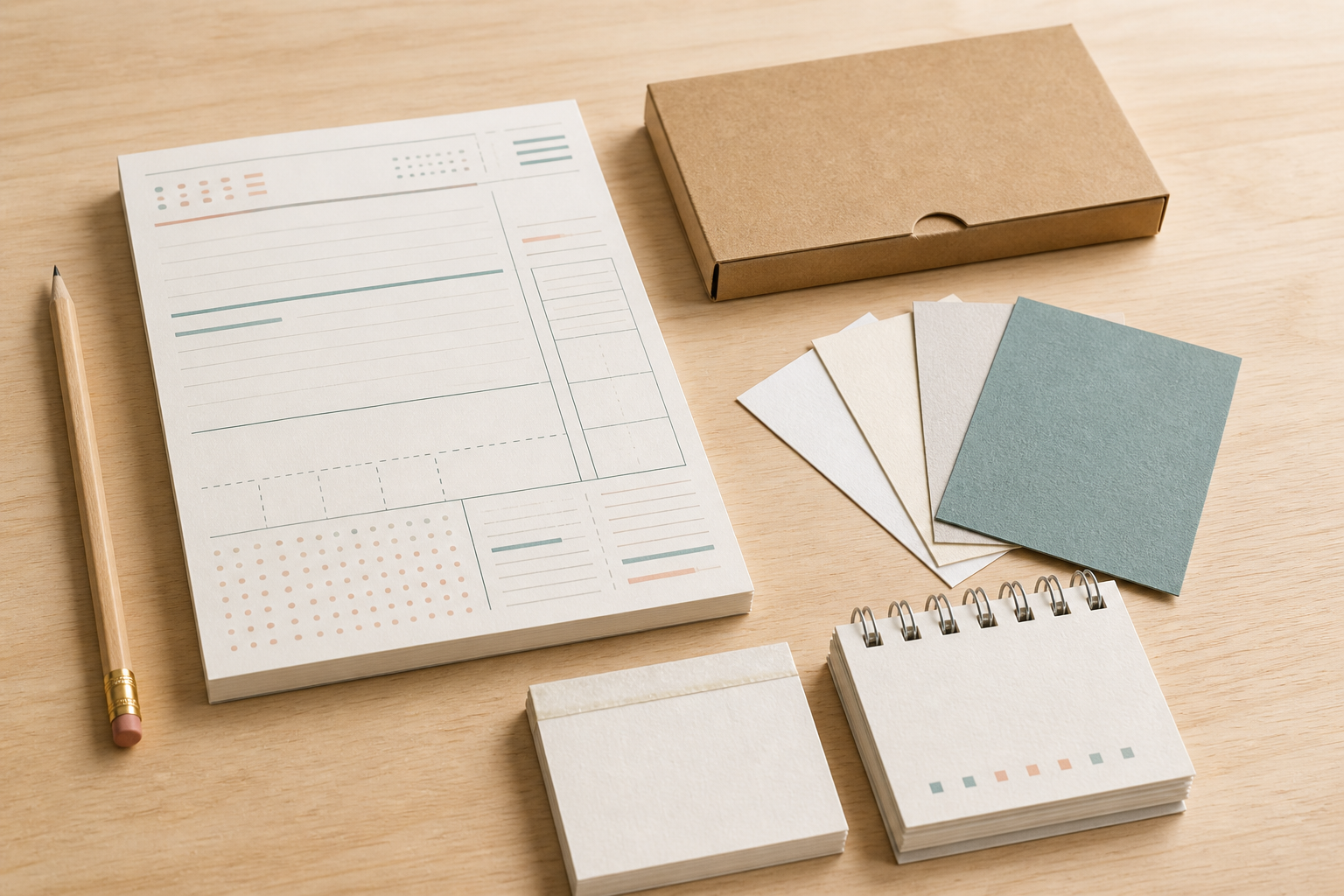
A practical custom Mahjong score pad starts with four connected decisions: the writing surface, paper weight, binding method, and number of usable sheets. These choices affect how the pad feels at the table, how easily pages can be removed, how compactly it stores, and how it should be packed. Confirm them together with the layout, print coverage, quantity, sample, and production schedule rather than treating each feature separately.
This guide helps clubs, event organizers, retailers, and custom brands prepare a clearer score pad specification without relying on unconfirmed product assumptions.
What is a custom Mahjong score pad?
A custom Mahjong score pad is a bound group of printed paper sheets designed to help players record information during a game session. The buyer supplies or approves the page layout, branding, physical format, and packaging. The supplier then reviews the requested construction and prepares a project-specific production plan.
A score pad should support clear handwriting, quick reference, and orderly storage. The page can be designed around original labels and fields that the buyer owns or has permission to use.
Begin with the writing experience
Paper should be selected for its real use at the table. A visually bright sheet may still be inconvenient if pencil marks are difficult to see, ink takes too long to dry, or the surface feels too slick.
- Likely writing tools, including pencil, ballpoint pen, or gel pen
- Whether writing appears on one side or both sides
- Expected erasing or correction
- Typical lighting conditions
- Need for a firm backing while writing
- Preferred paper color and visual contrast
If compatibility with a particular writing tool matters, test it on a physical sample. Descriptions such as smooth, uncoated, or easy to write on can narrow the options, but an actual writing test provides better evidence.
Choose paper weight as part of the full construction
Paper weight influences handling, show-through, pad thickness, shipping weight, and the number of sheets that fit comfortably in the selected binding and packaging.
Lighter paper can keep a high-sheet-count pad compact. Heavier paper can feel more substantial and may reduce show-through, but it also increases total thickness. The best choice depends on print coverage, whether both sides are used, writing tools, intended sheet count, and packaging.
Ask the supplier to confirm available paper options rather than assuming one specification fits every project. When a particular feel is important, provide an approved physical reference or request material samples.
Decide between single-sided and double-sided sheets
Single-sided sheets
Single-sided sheets can keep each scoring area visually independent. They may reduce distraction from reverse-side printing and make removed sheets easy to review. More paper may be required to provide the same number of usable layouts.
Double-sided sheets
Double-sided sheets can increase the number of usable layouts without doubling the sheet count. Review show-through, ink coverage, writing pressure, page orientation, and how the reverse side is positioned after a sheet is turned or removed.
State both the physical sheet count and the number of printed sides in the specification. “50 pages” can be interpreted differently if one person means 50 sheets and another means 50 printed faces.
Select a binding method for the intended use
Glued pad binding
A glued edge can create a familiar tear-off pad. It may be suitable when users want to remove completed sheets cleanly. Confirm the glued edge, backing board, tear-off behavior, and whether a cover sheet is required.
Stapled construction
Staples can hold sheets together securely, but the position and finish should be considered carefully. Confirm whether sheets are intended to remain bound or be removed, and check that the construction does not interfere with writing or safe handling.
Spiral or wire binding
A spiral or wire-bound pad can open flat and keep used pages attached. This may be useful for a reusable club record book or scorekeeping notebook. It can also increase total thickness and change the packaging requirement.
Loose sheets in a folder or pack
Loose score sheets may suit events or refill programs. They need a clear pack count and protective packaging so corners stay flat and sets do not become mixed during distribution.
The binding method should match the intended behavior. A sheet designed to be removed needs a different approval test from a page intended to remain in a bound book.
Calculate the right sheet count
Page count should be based on use frequency rather than a round number chosen without context.
- Count the number of tables or users.
- Estimate sessions per table.
- Confirm the number of sheets used per session.
- Plan the time between replenishment orders.
- Add sheets for demonstrations, corrections, or replacements.
- Keep archive samples for comparison and reordering.
For retail, consider how the sheet count appears on the packaging and whether the pad fits the expected shelf or shipping format. For events, confirm how many pads or sheet packs are assigned to each table and how extras will be distributed.
Add a backing board and cover only when they serve a purpose
A backing board can give the pad support on an uneven surface or when users hold it while writing. Its stiffness, thickness, color, print status, and relationship to the binding should be confirmed.
A cover can protect the first sheet and provide space for original branding or product information. It also adds another printed component to artwork approval and final counting. If the pad is stored inside a protective carton or pouch, determine whether a separate cover is still necessary.
Design the layout for fast handwriting
The physical construction and printed layout should be developed together. A compact pad may need simpler fields, while a larger pad can provide more writing space.
- Finished page size and orientation
- Margin near the bound edge
- Line and box spacing
- Label size and contrast
- Room for typical handwriting
- Repeated row alignment
- Print density behind handwritten entries
- Space for an original logo or approved brand information
Use original labels and buyer-approved content. Do not copy another publisher's layout, wording, illustrations, or proprietary reference material. Ask a fresh reader to review the sample because they may notice unclear labels or tight spaces more quickly.
Match print coverage to readability
Heavy background color can make handwriting harder to read and may increase show-through on lighter sheets. Decorative elements should support the product identity without competing with the fields users need to complete.
- Keep writing areas light and uncluttered.
- Use sufficient contrast between labels and paper.
- Keep important content away from trim and binding areas.
- Review thin lines at final printed size.
- Confirm the print configuration before final artwork.
- Use the approved supplier template, bleed, and safe areas.
A digital proof can confirm placement and spelling, but it cannot fully show paper feel, pencil behavior, ink drying, show-through, or tear-off performance.
Plan packaging around the pad edges
Score pads can be damaged by bent corners, moisture, pressure, or movement inside an oversized package. Packaging should keep the pad flat and identify the approved quantity without unsupported claims.
- Protective paper band or individual pack
- Printed carton
- Multi-pad club pack
- Event distribution pack
- Insert inside a larger accessory gift set
Confirm pads per pack, sheets per pad, labels, barcode or SKU placement, and units per export carton. If the score pad is paired with hard accessories, use a divider or separate compartment to reduce rubbing and corner damage.
Review a complete physical sample
A useful sample review should cover the whole assembled product, not only the printed page.
- Finished width, height, and orientation
- Paper color, weight, opacity, and writing feel
- Pencil and pen performance
- Print clarity and color
- Single- or double-sided orientation
- Physical sheet count and printed-side count
- Binding position, strength, and tear-off behavior
- Backing board and cover, if included
- Package fit, label accuracy, and carton organization
Record comments in one consolidated approval file. Identify the approved sample or revision by date and version so the buyer, designer, and supplier work from the same reference.
Plan MOQ and timing with the final specification
Custom MOQ is confirmed by inquiry because paper, sheet count, printing, binding, backing, covers, packaging, and the number of artwork versions can change the production structure. For existing-stock products, 5 sets is the current planning reference, subject to availability and final confirmation.
For scheduling, a regular custom sample is commonly around 10 days. Bulk production for score pads is commonly around 20–25 days. These are conditional planning references, not fixed delivery promises. Actual timing depends on the approved specification, artwork readiness, materials, processes, quantity, production schedule, feedback, revisions, and unexpected circumstances. Transportation time is additional.
For a club season, retail launch, or event date, work backward to allow time for sample delivery, review, correction, approval, production, transportation, receiving inspection, and distribution.
Keep reorder records clear
Paper products can look similar while differing in weight, shade, print, binding, or sheet count. Keep the final artwork, dimensions, paper reference, sheet count, print configuration, binding, backing, cover, packaging, sample photographs, carton quantities, and accepted production changes together.
Before a reorder, confirm which details remain the same and which need a new sample or revised schedule.
Custom Mahjong score pad specification checklist
- Intended user and sales or distribution channel
- Finished page size and orientation
- Paper feel, color, weight, and writing-tool expectations
- Single-sided or double-sided printing
- Physical sheet count and printed-side count
- Glued, stapled, bound, or loose-sheet construction
- Backing board and cover requirements
- Original or authorized page artwork
- Print colors and coverage
- Packaging, labels, barcode, and SKU requirements
- Quantity, number of designs, sample, destination, and timing
- Person responsible for final approval
A complete score pad brief makes material, binding, quantity, artwork, sample, and timing decisions easier to review as one connected product.
Frequently asked questions
What paper is best for a Mahjong score pad?
The best paper depends on the writing tools, print coverage, single- or double-sided use, page count, desired feel, and packaging. Request available material options and test pencil and pen performance on a physical sample when writing quality is important.
Is a heavier paper always better?
No. Heavier paper can feel more substantial and reduce show-through, but it also increases pad thickness and weight. A lighter paper may be more practical for a compact pad with many sheets. The complete construction should guide the choice.
What is the difference between sheet count and page count?
A sheet is one physical piece of paper. It can have one or two printed sides. State the physical sheet count and the number of usable printed sides separately so the product specification is unambiguous.
Which binding is best for removable score sheets?
A glued edge is a common option for tear-off use, while loose-sheet packs can support refills or event distribution. The correct choice depends on how sheets will be removed, stored, and distributed. Review the behavior on a physical sample.
What is the MOQ for custom Mahjong score pads?
Custom MOQ is confirmed by inquiry because page size, paper, sheet count, printing, binding, backing, covers, packaging, and the number of designs affect production planning. Existing-stock products currently use 5 sets as a planning reference, subject to availability and confirmation.
How long do custom Mahjong score pads take to produce?
A regular sample is commonly around 10 days, and score pad bulk production is commonly around 20–25 days. These are conditional references. The final specification, artwork, materials, process, quantity, schedule, feedback, revisions, and unexpected circumstances can affect timing. Transportation time is additional.
Should a physical sample be approved?
Yes. A physical sample allows the buyer to review paper feel, writing performance, opacity, print clarity, sheet count, binding, backing, cover, packaging, and the complete user experience before bulk production.
PLANNING A CUSTOM SCORE PAD?
Share the complete paper-product brief.
Send your intended use, finished size, paper and writing expectations, sheet count, binding preference, authorized artwork status, packaging idea, quantity, destination, and target timing for a practical sample and production review.
Start a project discussion ->