REORDER GUIDE · SCORE PADS, CLUBS & RETAILERS
How to Plan Mahjong Score Pad Reorders for Clubs and Retailers
Use real usage records, clear version control, confirmed specifications, and realistic scheduling to prepare a dependable reorder.
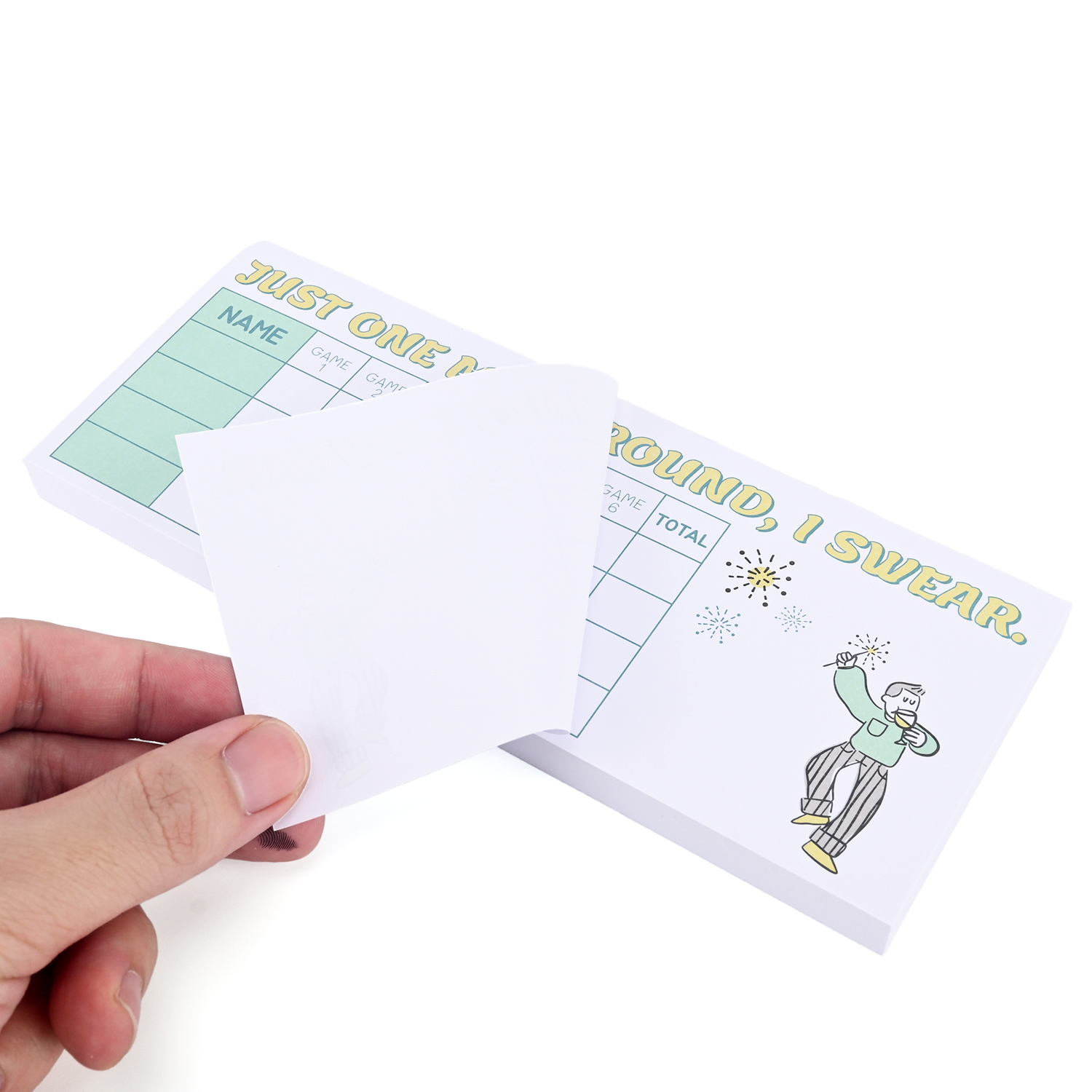
Mahjong score pad reorders are easier to manage when buyers track actual sheet use, keep a practical reserve, review upcoming club sessions or retail needs, and confirm the exact product version before production begins. A reorder plan should cover quantity, artwork status, paper and binding specifications, packaging, sample needs, production timing, and transportation separately.
For clubs, this process helps keep table supplies consistent across regular sessions and special events. For retailers, it supports steadier replenishment and reduces the chance of mixing different versions of the same product. The goal is not to predict demand perfectly. It is to create a simple, repeatable review process based on current information.
What is Mahjong score pad reorder planning?
Mahjong score pad reorder planning is the process of deciding when and how many score pads to request based on recent use, planned activities, remaining stock, and the time required to confirm and produce the next order.
A useful reorder review answers six questions:
- How many sheets or pads are being used in a typical period?
- Are upcoming sessions, classes, events, gifts, or retail activities expected to change demand?
- How much usable stock remains?
- Is the next order an unchanged repeat order or a revised custom version?
- What packaging and delivery arrangement is needed?
- How much conditional time should be allowed for confirmation, sampling, production, and transportation?
A dated usage log and a clear product record are often enough for a small club or specialty retailer.
Start with actual usage
Record the number of sheets or pads opened during a consistent period, such as each club session, class cycle, event, or retail restocking interval. If different locations or tables use supplies differently, record them separately before combining the totals.
- Date or reporting period
- Location, club, class, event, or retail channel
- Number of active tables or units supplied
- Pads opened and approximate sheets used
- Damaged, misplaced, or reserved units
- Remaining usable stock and notes about unusual activity
Several normal periods provide a better planning base than one unusually busy or quiet day. Keep special events visible in the record instead of allowing them to distort the regular-use estimate.
Convert sheet use into pad requirements
A pad is a supply unit, while a sheet is the unit consumed at the table. Buyers should confirm both values when planning a reorder.
The current American Mahjong Supply score-pad reference is a glue-bound pad with 100 single-sided printed sheets in a 196 × 78 mm horizontal format. The listed paper reference is 100 gsm offset paper, with the same design printed on each sheet. These specifications are product references, not assumptions to apply to every custom project; the final specification must be confirmed for the order.
- Calculate typical sheet use for the chosen planning period.
- Divide that use by the confirmed number of sheets per pad.
- Round up to whole pads.
- Add pads needed for known events, new locations, gifts, or retail displays.
- Add a reasonable operational reserve based on the buyer's actual replacement pattern.
Do not treat the reserve as a fixed universal percentage. A weekly club, seasonal retailer, multi-location program, and one-time event have different needs.
Set a practical review point
A reorder point is the stock level or calendar date that triggers a formal review. It should leave enough time to confirm details, resolve artwork questions, complete any required sampling, produce the order, and arrange transportation.
Clubs may prefer a calendar-based check before a new session cycle or event. Retailers may prefer a stock-based review tied to recent replenishment activity. Buyers with custom artwork should review earlier if a revision, approval, or new sample may be needed.
The review point is not a guaranteed delivery calculation. Production and transportation can change according to project conditions, so the plan should include flexibility rather than depend on one exact arrival date.
Separate repeat orders from revised custom orders
An unchanged repeat order can still create errors if files and specifications are not identified clearly. Confirm the previous project reference, finished size, sheet count, paper, printing, binding, packaging, quantity, approved artwork filename and version, destination, and requested schedule.
For a revised custom order, identify every change. Examples include updated authorized branding, revised contact details, adjusted writing areas, a different color direction, changed packaging, or a new quantity per design. Submit one consolidated revision list and archive the superseded file so it cannot be selected by mistake.
Custom artwork must be original or properly authorized. Do not include third-party logos, characters, photography, fonts, or designs without permission. Score-pad artwork should not reproduce protected instructional content or material copied from another publisher or organization.
Review usability before repeating a layout
Reordering is a useful checkpoint for collecting feedback from the people who handle the pads. Ask whether writing space is comfortable, fields are easy to locate, decorative elements compete with functional areas, sheets separate cleanly, the pad is easy to store and distribute, and all printed information remains current and authorized.
Feedback should focus on the form's usability and production quality. It should not introduce copied instructions, protected content, or third-party designs.
Confirm packaging and storage needs
The current product reference lists individual OPP-bag packing with export-carton packing. A custom or repeat order may require a different arrangement depending on distribution, storage, retail presentation, event kits, or inclusion with other accessories.
- Specify individual or grouped packing and quantities per pack or carton
- Confirm label information and protection from moisture, dust, bending, and compression
- State whether stock will be split among multiple locations
- Identify older and newer artwork versions clearly
Store score pads flat in a clean, dry area away from direct sunlight, moisture, excessive heat, and heavy objects. Keep cartons or packs labeled by design version and receipt date. Use older approved stock first when the printed information remains current.
Allow conditional time for custom production
For planning purposes, a custom sample normally takes about 10 days after the specification and production-ready artwork are confirmed. Mahjong score pad bulk production generally takes about 20–25 days after the specification, artwork, sample status, quantity, processes, and required approvals are confirmed.
These are conditional reference estimates, not fixed completion or arrival promises. Actual timing depends on the confirmed specifications, artwork readiness, printing and finishing requirements, packaging, quantity, production schedule, approvals, and other project conditions. Unexpected circumstances may add several days. Transportation time is separate and also depends on the destination, shipping method, carrier service, customs, and other conditions.
Selected ready-stock products currently use five sets only as a planning reference. Actual stock, design availability, and ordering terms must be confirmed. Custom MOQ is product-specific and should be requested according to the final specification; a ready-stock reference must not be applied to a custom order.
Mahjong score pad reorder checklist
- Record recent usage and count remaining usable stock
- Review upcoming sessions, events, locations, or retail needs
- Consider a practical reserve and identify the exact score-pad version
- Confirm size, sheet count, paper, printing, binding, and packaging
- Confirm artwork ownership, authorization, and current file version
- Request a product-specific custom MOQ
- Clarify sample needs and approval steps
- Treat production timing as conditional and plan transportation separately
Frequently asked questions
How can a club estimate how many Mahjong score pads it needs?
Track typical sheet use across several normal sessions, divide the total by the confirmed sheets per pad, round up to whole pads, and then consider upcoming events and an operational reserve. Use actual records rather than one unusually busy session.
What should be confirmed for an unchanged score-pad reorder?
Confirm the previous approved project reference, size, sheet count, paper, printing, binding, packaging, quantity, artwork filename and version, destination, and requested schedule. Do not rely only on a product photo or informal description.
When should custom score-pad artwork be reviewed again?
Review it whenever contact information, authorized branding, writing fields, colors, packaging, or other specifications change. Also confirm that the correct approved file is being used even when no changes are planned.
What is the MOQ for Mahjong score pads?
Selected ready-stock products currently use five sets only as a planning reference, subject to confirmation. Custom MOQ depends on the product specification, artwork, processes, packaging, number of designs, and quantity, so it must be requested for the specific project.
How long do custom Mahjong score pads take?
A custom sample normally takes about 10 days. Score-pad bulk production generally takes about 20–25 days after the required details and approvals are confirmed. These are conditional references; unexpected circumstances may add several days, and transportation time is separate.
How should unused score pads be stored?
Keep them flat in a clean, dry area away from moisture, direct sunlight, excessive heat, and heavy objects. Label packs by design version and receipt date so approved stock can be rotated without mixing outdated artwork.
Final takeaway
A dependable Mahjong score pad reorder process combines real usage records, a practical reserve, clear version control, confirmed specifications, authorized artwork, suitable packaging, and realistic scheduling. Clubs and retailers should review supplies before they become urgent and provide one complete, current handoff for each repeat or revised order.
PLANNING A SCORE-PAD REORDER?
Share the current project details.
Send the intended use, previous project reference if available, required quantity, artwork status, packaging needs, destination, and requested schedule for a product-specific review.
Start a reorder discussion ->Learn how to plan custom Mahjong score pads for clubs and events.