BUYER GUIDE · MAHJONG-THEMED PUZZLES
How to Order Custom Mahjong-Themed Puzzles: A Buyer's Specification Checklist
Organize the physical product, authorized artwork, packaging, sample, and timeline before requesting a custom production plan.
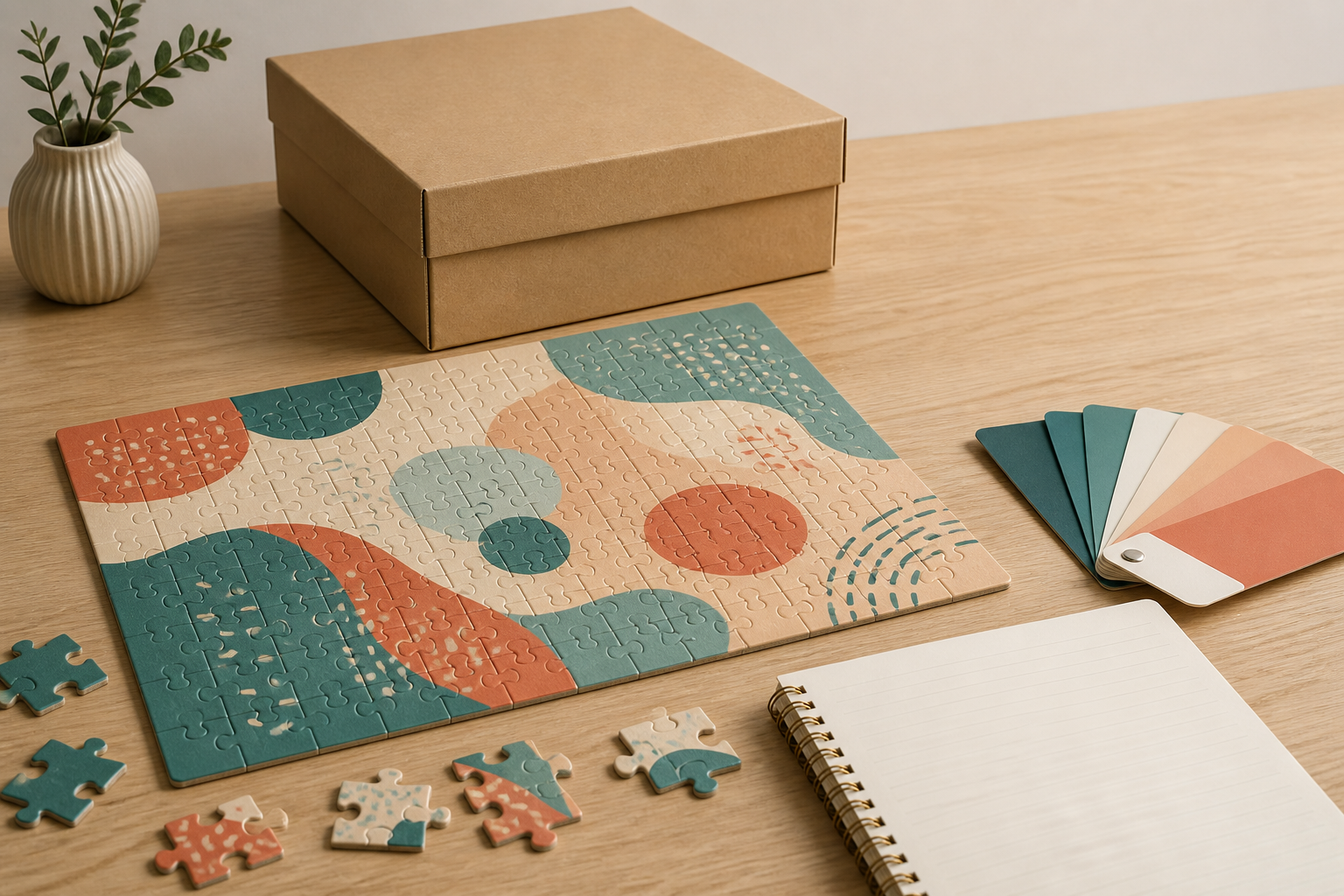
To order a custom Mahjong-themed puzzle efficiently, prepare one clear specification covering the intended customer, finished puzzle size, piece count, material expectations, authorized artwork, packaging, quantity, sample review, destination, and target timing. These details allow the supplier to assess feasibility, confirm a project-specific MOQ, and prepare a more accurate production plan.
A custom puzzle combines printed artwork, precision cutting, board performance, packaging, and many individual pieces. If one part of the specification changes, it may affect the template, sample, carton plan, or schedule. Retailers, clubs, event organizers, and custom brands can reduce avoidable revisions by organizing the full product brief before artwork is released for production.
What is a custom Mahjong-themed puzzle specification?
A custom Mahjong-themed puzzle specification is the approved set of physical, visual, packing, and delivery requirements used to prepare the product. It should describe what will be made without relying on assumptions or visual references alone.
- Identify the intended user and sales channel.
- Confirm the finished puzzle dimensions and piece count.
- Define the material, print, surface, and back expectations.
- Verify that all supplied artwork is authorized.
- Specify the box, inner packing, labels, and carton needs.
- Provide the quantity, destination, and target timing.
The specification becomes the reference for artwork setup, sampling, approvals, production, inspection, and packing.
Start with the customer and sales channel
The intended customer should guide the product rather than being added after the design is finished. A puzzle for an adult gift collection may need a different piece count, visual density, packaging style, and product description from one prepared for a club event, specialty retailer, or branded merchandise program.
Before requesting a quote, define:
- Intended age range and user experience
- Retail, club, event, gift, or promotional use
- Whether the puzzle is sold individually or included in a set
- Expected shelf, shipping, or storage conditions
- Barcode, SKU, label, or product-information needs
- Destination market and buyer-supplied labeling requirements
This context helps the supplier identify practical questions early. It does not replace the detailed product specification, but it explains why the chosen features matter.
Confirm finished size and piece count together
Finished dimensions and piece count should be reviewed as a pair. The same overall puzzle size can create a different experience when divided into fewer large pieces or many smaller pieces.
- Finished puzzle width, height, and orientation
- Total piece count and intended difficulty
- Standard or custom piece-cut pattern
- Required tolerance and fit expectations
- Whether a physical reference sample is available
Do not prepare final cutting-sensitive artwork around an unconfirmed template. Request the current production template after the physical specification is agreed, then keep important design elements away from cut-sensitive areas when appropriate.
Define the board, print, and surface expectations
Material choices influence flatness, durability, print appearance, edge quality, piece handling, and packaging weight. Product descriptions such as “premium” or “thick” are subjective and should be replaced with measurable or sample-based requirements.
Discuss the board type and finished thickness, printed surface layer, print configuration, available surface treatment, color-reference method, back appearance, piece feel, separation, and relevant packing expectations. Available options depend on the confirmed project. If a particular feel or appearance is important, provide a physical reference or request a sample instead of relying only on descriptive language.
Prepare authorized artwork for the final template
Artwork should be original, properly licensed, or used with permission. The buyer should confirm commercial rights to every illustration, photograph, icon, phrase, logo, font, and design element supplied for production.
- Size artwork to the current supplier template.
- Include the required bleed and safe areas.
- Use suitable image resolution at final size.
- Apply the agreed color settings.
- Outline or package fonts as requested.
- Name puzzle, box, insert, and label files clearly.
- Keep one numbered final artwork version.
- Document any third-party permissions.
Avoid copying recognizable third-party puzzle layouts, branded designs, protected instructions, or unlicensed game imagery. The box image, product listing, and physical puzzle should all use the same approved artwork version.
Decide how the puzzle will be packed
Packaging is part of the product specification, not an afterthought. It protects the pieces, communicates the contents, and affects shelf presentation, shipping, and storage.
- Box style and finished dimensions
- Inner bag or other piece-containment method
- Authorized reference image or guide, when required
- Insert, label, or information-panel needs
- Barcode and SKU placement
- Units per inner pack and export carton
- Carton marks and destination requirements
Keep every claim on the packaging consistent with the approved specification. Do not state an unconfirmed material, finish, piece count, accessory, certification, or performance claim.
Submit one complete inquiry
A complete inquiry allows the supplier to review the project as a connected product rather than answering isolated questions. Include the project name, intended customer, finished size, piece count, material and finish preferences, packaging concept, quantity, number of artwork versions, artwork status, label needs, sample requirement, destination, and target arrival period.
Custom MOQ is confirmed by inquiry because size, piece count, material, cutting, artwork versions, packaging, and quantity can change the production plan. A ready-stock planning reference should not be applied automatically to a custom project.
Review a physical sample before bulk production
A digital proof can help confirm spelling, layout, and file placement, but it cannot fully demonstrate piece fit, thickness, surface feel, cutting, color appearance, box fit, or the experience of opening and assembling the puzzle.
Use a written sample checklist to review finished size and orientation, piece count, cut pattern, piece separation and fit, board thickness, edge quality, print clarity, front and back appearance, artwork position, box dimensions, inner packing, labels, barcode, spelling, and approved product information.
Record all requested changes in one consolidated revision document. If size, board, cut pattern, artwork, finish, packaging, or quantity changes after approval, confirm whether a revised sample and updated schedule are needed.
Plan a conditional production timeline
For custom Mahjong-themed puzzles, a regular physical sample is typically around 10 days. Puzzle bulk production is typically around 20–25 days.
These are planning references rather than fixed delivery promises. Actual timing depends on the final specification, approved artwork, process, quantity, production schedule, sample feedback, revisions, and unexpected circumstances. Transportation time is separate and should be planned according to the destination and shipping method.
Buyers working toward an event or retail launch should also allow time for artwork preparation, sample delivery, internal approval, receiving inspection, photography, listing preparation, and distribution after the finished goods arrive.
Final custom puzzle ordering checklist
- Intended customer and sales channel
- Finished size, orientation, and piece count
- Approved cut approach and fit expectation
- Board, print, surface, and back requirements
- Original or authorized artwork
- Current production template
- Box and inner packing specification
- Labels, barcode, SKU, and product information
- Quantity, artwork versions, and custom MOQ
- Physical sample and consolidated approval
- Conditional production and transportation plan
A strong custom-puzzle inquiry is specific enough to manufacture and simple enough for every party to follow. Clear specifications help the buyer, supplier, designer, production team, and packing team work from the same approved product definition.
Frequently asked questions
What information is needed to request a custom Mahjong-themed puzzle?
Provide the intended use, finished size, piece count, material and finish preferences, authorized artwork status, packaging, quantity, destination, and target timing. Include barcode, label, or SKU requirements when applicable.
What is the MOQ for a custom Mahjong-themed puzzle?
Custom MOQ is confirmed by inquiry. It can vary with size, piece count, material, cutting, number of designs, packaging, and total quantity.
Should artwork be finalized before the product specification?
No. Confirm the physical specification and current production template first. Final artwork should be prepared for the approved size, orientation, bleed, safe areas, and packaging structure.
Is a digital proof enough for approval?
A digital proof is useful for layout and text review, but a physical sample is recommended for checking piece fit, board, cutting, print appearance, surface, packaging, and the complete user experience.
How long do custom Mahjong-themed puzzles take to produce?
A regular physical sample is typically around 10 days, and puzzle bulk production is typically around 20–25 days. Timing is conditional on the specification, artwork, process, quantity, schedule, feedback, and revisions. Transportation time is separate.
PLANNING A CUSTOM MAHJONG-THEMED PUZZLE?
Share your product and packaging requirements.
Send the intended use, finished size, piece count, material preference, authorized artwork status, packaging idea, quantity, destination, and target timing for a project-specific review.
Start a project discussion ->Plan a puzzle for retail or gifting.
Prepare production-ready puzzle artwork.